
North Toledo Chemical (Glycidyl Methacrylate) Release: What Northwest Ohio and Southeast Michigan Families Need to Know
On October 20, a chemical leak at the MC Tank terminal, 1266 Progress Avenue in north Toledo, sent chemical-containing smoke over nearby neighborhoods. Everyone within one mile was ordered to evacuate. Residents within three miles, including Point Place, the Alexis Addition, and Raintree Village, were told to shelter in place. Just across the state line, families in Temperance, Lambertville, Luna Pier, and Monroe wait for answers.
The chemical burning is Glycidyl Methacrylate.
According to Santa Cruz Biotechnology data sheet these are the potential side effects and injuries that could occur from exposure to Glycidyl Methacrylate.
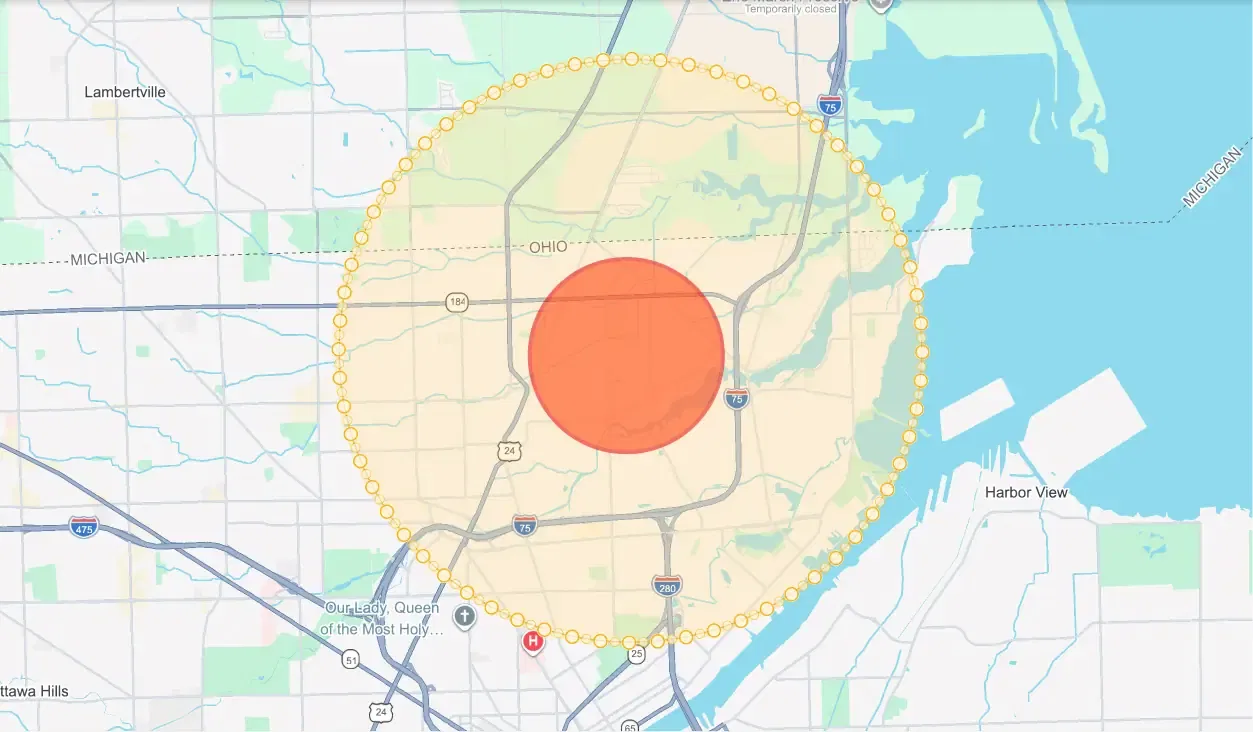
Acute Health Effects
Swallowed (Ingestion)
- Accidental ingestion of the material may be harmful; animal experiments indicate that ingestion of less than 150 grams may be fatal or may produce serious damage to the health of the individual.
- The material can produce chemical burns within the oral cavity and gastrointestinal tract following ingestion.
- Swallowing of the liquid may cause aspiration into the lungs with the risk of chemical pneumonitis; serious consequences may result.
- Ingestion of glycidyl methacrylate may result in gastrointestinal irritation or ulceration and in burns of the mouth and throat.
Eye
- This material can cause eye irritation and damage in some persons.
- The material can produce chemical burns to the eye following direct contact. Vapors or mists may be extremely irritating.
- Glycidyl methacrylate may cause severe eye irritation or severe corneal injury. Effects may be slow to heal.
Skin
- This material can cause inflammation of the skin on contact in some persons.
- Skin contact with the material may be harmful; systemic effects may result following absorption.
- The material can produce chemical burns following direct contact with the skin.
- Brief contact with glycidyl methacrylate may cause skin burns. Symptoms may include pain, severe local redness and tissue damage.
- Irritation and skin reactions are possible with sensitive skin.
- Open cuts, abraded or irritated skin should not be exposed to this material.
- Entry into the blood stream, through, for example, cuts, abrasions or lesions, may produce systemic injury with harmful effects. Examine the skin prior to the use of the material and ensure that any external damage is suitably protected.
Inhaled
- If inhaled, this material can irritate the throat and lungs of some persons.
- The material is not thought to produce adverse health effects following inhalation (as classified using animal models). Nevertheless, adverse effects have been produced following exposure of animals by at least one other route and good hygiene practice requires that exposure be kept to a minimum and that suitable control measures be used in an occupational setting.
- Prolonged excessive exposure to glycidyl methacrylate may cause adverse effects. Excessive exposure may cause severe irritation to upper respiratory tract (nose and throat) and lungs.
Chronic Health Effects
- Repeated or prolonged exposure to corrosives may result in the erosion of teeth, inflammatory and ulcerative changes in the mouth and necrosis (rarely) of the jaw.
- Bronchial irritation, with cough, and frequent attacks of bronchial pneumonia may ensue.
- Strong evidence exists that the substance may cause irreversible but non lethal mutagenic effects following a single exposure.
- Skin contact with the material is more likely to cause a sensitization reaction in some persons compared to the general population.
- Limited evidence suggests that repeated or long term occupational exposure may produce cumulative health effects involving organs or biochemical systems.
- There is some evidence that inhaling this product is more likely to cause a sensitization reaction in some persons compared to the general population.
- The epoxide group is an alkylating agent and thus destroys nucleotides within the cell. This may cause cancer.
Officials have said it could irritate the eyes and throat and cause burning of the eyes, nose, mouth, and skin. Overexposure symptoms include headache, dizziness, tiredness, nausea, and vomiting. The city reported no injuries or fatalities, but that does not end the inquiry. Medical bills, missed work, evacuation costs, and worry about long-term effects can follow, while corporations and insurers delay or deny responsibility.
Why This Could Be a Mass Tort
A release can harm a whole region, yet no two families are harmed the same way. One person may need care for burning eyes. Another may have paid for a hotel or face ongoing medical monitoring. As our Mass Torts page explains, a class action treats everyone as though they were harmed the same way and divides one result. In a mass tort, many people sue the same defendant over the same event, but each keeps an individual claim based on their own injuries and losses.
Who May Be Responsible
Responsibility may not stop with the terminal operator. An investigation may need to examine MC Tank, the owner of the leaking tank, the owner of the chemical, transporters, and contractors for storage, inspection, or maintenance. Proving a claim requires connecting your location, timing, and symptoms to the release, often with toxicologists and medical experts. Standards under the Clean Air Act, CERCLA, and RCRA, and records from U.S. EPA Region 5, which covers Ohio and Michigan, the Ohio EPA, and Michigan EGLE, can help show whether rules were followed.
Protect your evidence now. Get medical care and tell the provider about the possible exposure. Write down where you were, when you saw or smelled the plume, and what you felt. Save hotel, mileage, and missed-work records, photographs, and official alerts. Do not sign a release before getting legal advice.
Compensation and Deadlines Across the State Line
Compensation may include current and future medical bills, medical monitoring, long-term care, lost wages and earning capacity, disability costs, disfigurement, pain and suffering, emotional harm, property damage or loss of value, cleanup costs, and temporary housing.
Deadlines depend on where you were exposed and where your claim is filed. Ohio bodily injury claims generally must be brought within two years and for chemical exposure that clock can turn on when a medical authority linked your injury to the exposure. Michigan generally allows three years. Do not assume the longer period protects you.
Your Fight Is Our Fight. If you were evacuated, sheltered in place, treated, or displaced by this release, contact White Law PLLC at 517-316-1195 for a case evaluation.